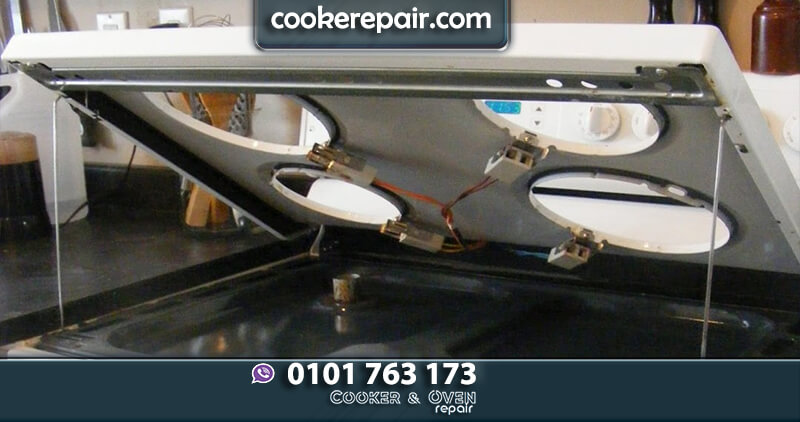
Almost every household deals with cooker problems at some point, whether it's a burner that won't light, an oven that runs too hot, or a gas cooker that smells faintly of fuel every time it's switched on. A cooker is one of the most heavily used appliances in any kitchen, so it's no surprise that wear, dirt, and the occasional electrical or gas fault eventually catch up with it. The good news is that many cooker problems are simple enough to diagnose at home, and only a handful genuinely require a professional visit. This guide walks through the most frequent issues people run into with both gas and electric cookers, what usually causes them, and which fixes you can attempt yourself versus when it's time to call in help.
PAGE CONTENT
How Cooker Problems Come About in the first place
Before troubleshooting individual faults, it helps to understand why cooker problems happen so often. Cookers combine heat, moisture, grease, and — in gas models — a live fuel supply, all in one compact unit. Over time this combination leads to:
- Grease and food debris clogging burners, igniters, and vents
- Worn-out seals, gaskets, and thermostats losing accuracy
- Loose or corroded electrical connections in coils and control boards
- Gas line or regulator issues that affect flame consistency
- General wear on knobs, hinges, and door seals from daily use
Regular cleaning and the occasional inspection go a long way toward preventing many of these issues before they start.
Quick Reference: Common Cooker Problems at a Glance
The table below summarizes the most frequently reported cooker problems, their likely causes, and whether they're typically a DIY fix or a job for a technician.
| Problem | Likely Cause | DIY Fix? | Technician Needed? |
| Burner won't light | Clogged ports, dead igniter, gas supply issue | Sometimes | Yes, if gas-related |
| Uneven or weak flame | Dirty burner cap, misaligned burner | Yes | Rarely |
| Oven not heating | Faulty heating element or thermostat | No | Yes |
| Oven overheating/undercooking | Miscalibrated thermostat | Sometimes | Yes, for recalibration |
| Gas smell near cooker | Loose connection, leaking hose or valve | No | Yes, urgently |
| Electric hob not working | Tripped circuit, faulty coil/element | Sometimes | Yes, for wiring |
| Door won't seal properly | Worn gasket, bent hinge | Yes | Rarely |
| Sparking or clicking ignition | Moisture, dirty igniter, wiring fault | Sometimes | Yes, if persistent |
| Unusual burning smell | Grease buildup, food residue | Yes | No |
| Control knobs stiff or unresponsive | Grease buildup, worn knob mechanism | Yes | Rarely |
Below, each of these cooker problems is broken down in more detail, along with practical steps you can take.
- Burner Won't Light
This is one of the most common cooker problems on gas cookers. It's usually caused by food debris blocking the small ports around the burner cap, preventing gas from reaching the igniter evenly.
- Remove the burner cap and soak it in warm, soapy water
- Use a needle or fine wire to clear each individual port
- Check that the igniter clicks and produces a visible spark
- Confirm the gas supply valve is fully open
If cleaning doesn't resolve it and you suspect the gas supply itself is the issue, this is not something to troubleshoot further on your own. If you're smelling gas or unsure whether it's safe to keep testing your burner, stop immediately. Call 0723763173 or visit cookerepair.com for a same-day professional inspection.
- Uneven or Weak Flame
A flame that burns orange instead of blue, or that's noticeably weaker on one side, usually points to a dirty burner cap or a misaligned burner sitting slightly off its base.
- Wipe down the burner cap and head thoroughly
- Reseat the burner cap, making sure it clicks or sits flush
- Check for visible cracks in the burner cap, which may need replacing
This is one of the easier cooker problems to resolve without any tools beyond a cloth and some patience.
- Oven Not Heating at All
When the oven won't heat, the culprit is typically a burnt-out heating element (electric ovens) or a faulty igniter/thermostat (gas ovens). Unlike burner issues, this usually isn't something you can fix with cleaning alone.
- Check whether the element is visibly discolored, blistered, or has a visible break
- Test whether the oven light and other functions still work, which helps isolate the fault
- Avoid attempting to replace electrical heating elements yourself unless you're confident working with appliance wiring
- Oven Overheating or Undercooking Food
If your dishes are consistently coming out overdone or underdone despite following recipe timings, your thermostat is likely miscalibrated. This is a subtler version of common cooker problems, since the appliance still "works" — it's just inaccurate.
- Use an oven thermometer to compare the actual temperature to the dial setting
- Note the difference and adjust your cooking temperature accordingly as a short-term fix
- Have the thermostat recalibrated or replaced for a permanent solution
- Gas Smell Near the Cooker
A persistent gas smell is the one item on this list that should never be treated as a DIY project. It can indicate a loose connection, a perished hose, or a faulty valve.
- Turn off the gas supply at the source immediately
- Ventilate the kitchen by opening windows and doors
- Avoid using naked flames, switches, or anything that could spark
Gas-related cooker problems are a safety issue, not just an inconvenience. Call 0723763173 now or head to cookerepair.com to book an urgent inspection before using your cooker again.
- Electric Hob Not Working
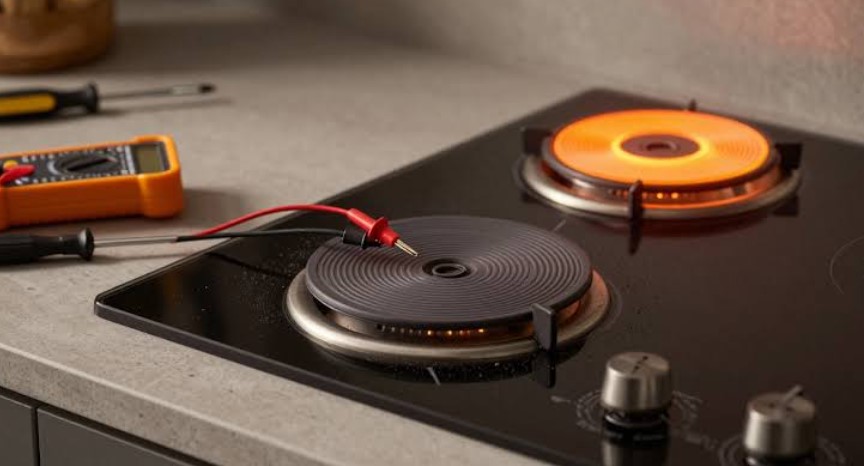
For electric and induction cookers, a dead hob is often traced back to a tripped circuit, a blown fuse, or a failed heating coil.
- Check your home's circuit breaker or fuse box first
- Test other hobs on the same cooker to see if the fault is isolated to one zone
- Listen or feel for any unusual clicking, buzzing, or heat inconsistency
- Door Won't Seal Properly
A door that doesn't close tightly lets heat escape, which drives up cooking times and energy use. This is usually down to a worn rubber gasket or a hinge that's bent out of shape.
- Inspect the door seal for visible gaps, tears, or flattening
- Clean the seal and door frame, since grease buildup can prevent a proper seal
- Replace the gasket if it's clearly worn — these are generally inexpensive and easy to source
- Sparking, Clicking, or Failing Ignition
Persistent clicking without ignition, or visible sparking in the wrong place, points to moisture, a dirty igniter, or a wiring fault.
- Dry the igniter thoroughly if the cooker was recently cleaned with water
- Clean around the igniter tip with a soft, dry brush
- If sparking continues after cleaning, treat it as an electrical fault rather than a cleaning issue
When It's Time to Call a Professional
Not every one of these cooker problems is safe or practical to fix yourself. As a general rule:
- Anything involving a gas smell, leak, or suspected line fault
- Electrical faults involving heating elements, coils, or internal wiring
- Persistent issues that return shortly after a DIY fix
- Any repair that would void your appliance's warranty if opened
Don't take chances with a cooker that's acting unpredictably. Call 0723763173 or visit cookerepair.com to get a qualified technician out to diagnose the issue properly. Most cooker problems fall into one of two categories: a quick cleaning or adjustment you can handle in a few minutes, or a gas or electrical fault that genuinely needs a trained technician. Knowing which category your issue falls into — and acting quickly on anything involving gas or wiring — is the best way to keep your kitchen both functional and safe. When in doubt, it's always worth getting a professional opinion rather than guessing.
SERVICES LIST