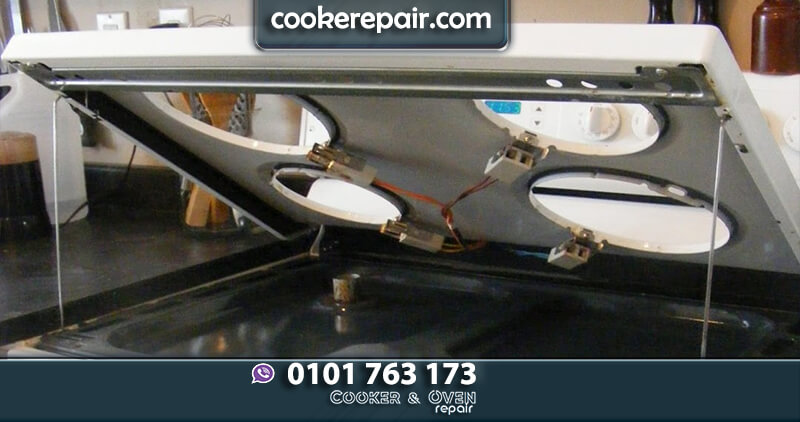
Convection ovens have become increasingly popular in modern kitchens, and for good reason — they cook faster, more evenly, and more efficiently than their conventional counterparts. But with added technology comes added complexity, and when something goes wrong, you need a repair team that understands exactly how these appliances function. At Cooker Repair, we handle convection oven faults every day across Nairobi.
PAGE CONTENT
How a Convection Oven Works
The key difference between a convection oven and a conventional one lies in a single component: a fan. In a convection oven, one or more fans are mounted at the rear of the oven cavity. These fans continuously circulate hot air around the food, eliminating the cold and hot pockets that form in a still-air environment.
Here’s how the system works step by step:
- You select the temperature and mode. Most convection ovens allow you to choose between conventional and convection modes.
- The heating element activates. This is typically a wraparound element at the back of the oven, surrounding or positioned near the fan.
- The fan draws air across the element and pushes it into the cavity. This creates a continuous flow of evenly heated air around the food.
- The thermostat regulates the cycle. As with conventional ovens, a thermostat monitors internal temperature and switches the element on and off accordingly.
- Cooking times are shorter. Because hot air is constantly moving, food cooks faster — typically 20–25% quicker than in a conventional oven.
Key components include: the fan motor, fan blade, rear heating element, front/bottom bake element, thermostat, door seal, selector switch, and the control board in electronic models.
The fan motor is the most distinctive component and, over time, one of the most common sources of faults. It operates under high heat conditions every time the oven is used, making it susceptible to wear. Similarly, the fan blade can accumulate grease and residue that causes imbalance and noise. Regular cleaning helps, but mechanical wear is inevitable with heavy use.
Common Convection Oven Issues We Fix
| Problem | Likely Cause | Our Fix |
|---|---|---|
| Fan not spinning during cooking | Failed fan motor or seized fan blade | Fan motor or blade replacement |
| Loud grinding or rattling noise | Worn fan motor bearings or debris on blade | Motor replacement or blade cleaning |
| Uneven cooking despite fan running | Partially failed heating element | Element testing and replacement |
| Oven not reaching set temperature | Faulty thermostat or weak element | Thermostat or element replacement |
| Oven overheating | Thermostat failure or stuck relay | Thermostat or control board repair |
| Control panel unresponsive | Faulty electronic control board | Control board diagnosis and replacement |
| Door seal deteriorating | Age, heat damage, or grease buildup | Gasket replacement |
| Error codes on display | Sensor or control board fault | Diagnostic scan and targeted repair |
| Oven trips the power | Electrical short in element or wiring | Full electrical inspection |
| Oven light not working | Blown bulb or faulty lamp holder | Bulb or holder replacement |
Getting the Most from Your Convection Oven
Convection ovens are an investment, and with proper care they last many years. Wipe the fan blade and rear element area regularly to prevent grease buildup. Avoid lining the oven floor with foil, as this disrupts airflow. And if you hear any new sounds — grinding, rattling, or clicking — call us promptly before a minor issue becomes a major repair.
Get in touch with us today: 📞 Phone: 0101 763 173 | 🌐 Website: cookerepair.com | 📍 Address: Kangari Hse, Luthuli Avenue, Nairobi