
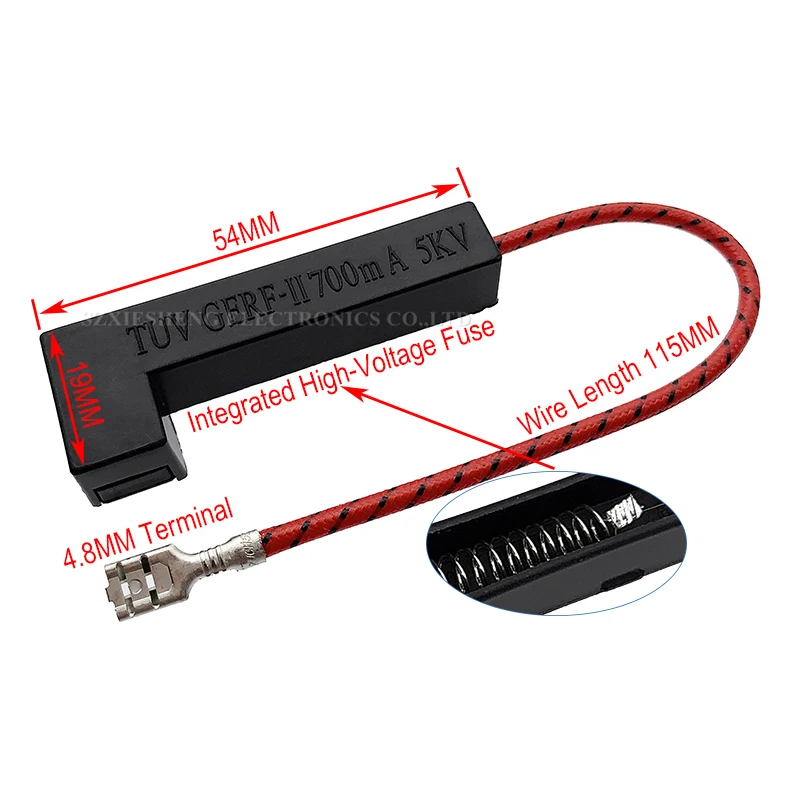
The high-voltage fuse in a microwave oven serves as a critical safety component in the high-voltage circuit, designed to protect the appliance and users by interrupting power during faults like short circuits or overcurrent. Typically rated at 5KV and currents such as 0.65A or 0.75A, it melts or breaks to prevent damage to the magnetron, transformer, or capacitor, which operate at thousands of volts.
PAGE CONTENT
Core Function Explained
This fuse sits between the high-voltage transformer and the magnetron, the part that generates microwaves for heating food. When everything works normally, it allows current to flow uninterrupted. But if a surge occurs—say from a power spike common in Nairobi's variable grid or internal arcing—the fuse blows instantly, cutting off high voltage to avert fires or explosions.
Unlike standard low-voltage fuses, this one handles extreme voltages up to 5kV, using specialized materials like ceramic tubes with copper wires for durability. It acts as a one-time safeguard; once blown, replacement is essential, as it doesn't reset like circuit breakers. In microwaves from brands like Samsung or LG, it's often a glass or ceramic tube about 40mm x 6.3mm with leads of 9-11cm.
Why It Blows and Signs of Failure
Overloads happen from aging components, moisture ingress, or voltage fluctuations—issues Nairobi users face with frequent blackouts. A blown fuse shows as no heating despite the unit powering on, or total power loss. Testing requires discharging the capacitor first for safety, then using a multimeter on continuity mode.
Ignoring it risks further damage; for instance, a faulty diode might blow fuses repeatedly. Technicians in areas like Eastlands or Westlands recommend checking alongside the high-voltage diode and capacitor during repairs.
Replacement Process Step-by-Step
Unplug the microwave and discharge the capacitor using an insulated screwdriver to avoid lethal shocks—high voltage lingers even unplugged. Remove the outer casing (usually 8-10 screws), locate the fuse near the transformer (often white or yellow tube), and desolder the leads. Install a matching replacement, like 5KV 0.65A, ensuring polarity if applicable, then reassemble and test.
DIY suits tech-savvy users, but pros charge KES 1,000-3,000 for labor in Nairobi, sourcing parts from Luthuli Avenue or online. Always match specs to avoid repeats; generic fuses work for most brands.
Pricing Table for Different Brands
Prices in Nairobi vary by retailer like Nerokas, Pixel Electric, and Jiji sellers, with generics cheaper than OEM. Expect KES 300-600 for most, influenced by amperage and stock. Delivery adds KES 100-300 within the city.
Note: Prices as of April 2026; check current listings for fluctuations. Bulk buys or Jiji haggling can lower costs.
Where to Buy in Nairobi
Luthuli Avenue electronics hubs offer walk-in options with immediate fitting. Online, Nerokas.co.ke and pixelelectric.com deliver citywide, often same-day. Jiji.co.ke lists second-hand or bulk from technicians, while Jumia has imports but slower shipping. Verify authenticity to dodge counterfeits that fail prematurely.
For facility managers or homes, stocking spares prevents downtime— a single fuse outage halts kitchen ops.
Maintenance Tips for Longevity
Clean vents regularly to prevent overheating, which stresses the fuse. Use stabilizers amid Kenya Power surges, and avoid metal objects inside. Annual checks by services like those in Industrial Area catch issues early, extending microwave life beyond 5-7 years. Pairing with quality inverters helps in off-grid setups common in outskirts.
Opting for fuses from reputable Nairobi suppliers ensures compatibility across models from Samsung to Chinese brands. With proper handling, this small part keeps high-power cooking safe and efficient, saving on full replacements costing KES 10,000+.